



When you live in Florida, your air conditioner does a lot of heavy lifting. Between the heat, humidity, and long cooling seasons, your AC system is one of the most important parts of your home. So when something feels off, it can be stressful fast.
One problem many homeowners run into is a frozen air conditioner. It may sound strange, especially when it is hot outside, but an AC system can freeze up even during the middle of summer. When this happens, your system may stop cooling properly, airflow may weaken, and ice may form on the refrigerant lines or evaporator coil.
The good news is that there are warning signs you can watch for. Knowing how to tell if your AC is frozen can help you catch the issue early and avoid making the problem worse.
What Does It Mean When an AC Is Frozen?
A frozen AC usually means ice has formed somewhere inside or around the cooling system. Most often, this happens on the evaporator coil or refrigerant line. Your evaporator coil is responsible for absorbing heat from the air inside your home. When everything is working correctly, warm air passes over the coil, heat is removed, and cool air is sent back into your living space.
But if airflow is restricted or refrigerant levels are not right, the coil can become too cold. Moisture in the air may then freeze on the coil instead of draining away like it should. Over time, that ice can build up and make it harder for the system to cool your home.
A frozen AC is not something to ignore. Even if the system still seems to be running, it may be under extra strain and could be at risk for more serious damage.
Signs Your AC May Be Frozen
Sometimes a frozen AC is obvious. Other times, the signs are more subtle. Here are some of the most common things to look for.
1. Your AC Is Running, But the House Is Not Cooling
One of the biggest signs of a frozen AC is a system that keeps running without making your home comfortable. You may hear the unit turn on, but the temperature inside does not seem to drop.
This happens because ice can block the coil from absorbing heat properly. Instead of cooling your home efficiently, the system keeps working harder while producing weak or limited cooling.
If your thermostat is set correctly but your home still feels warm or humid, your AC may need attention.
2. Weak Airflow from the Vents
Another common sign is weak airflow. If you put your hand near a vent and notice that barely any air is coming out, your system may be struggling.
Weak airflow can be both a cause and a symptom of a frozen AC. A dirty air filter, blocked return vent, blower issue, or duct problem can limit airflow across the evaporator coil. When there is not enough warm air moving over the coil, the coil can get too cold and freeze.
If the AC has already frozen, the ice can restrict performance even more. That means the system may continue running while delivering very little cool air.
3. Ice on the Refrigerant Line
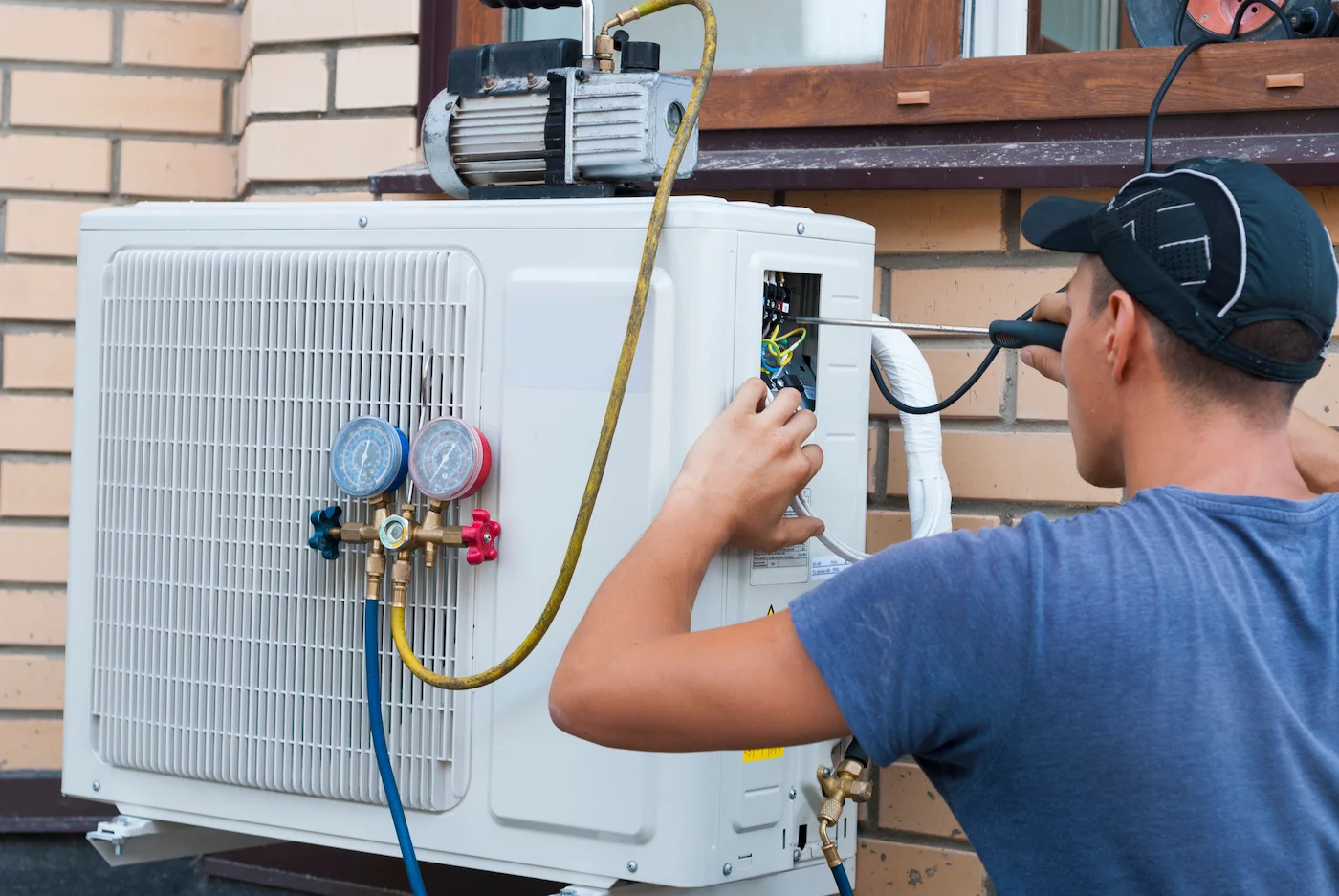
If you suspect your AC is frozen, take a look at the outdoor unit and the copper refrigerant line connected to it. If you see ice or frost on the line, that is a strong sign something is wrong.
You may also notice ice around parts of the indoor air handler, depending on your system setup. Do not try to chip away the ice or force the system to keep running. Ice is a symptom of a larger issue, and removing it without fixing the cause will not solve the problem.
4. Water Around the Indoor Unit
As the ice starts to melt, you may notice water around the indoor unit. This can happen after the system shuts off or after you turn it off to thaw.
Some moisture is normal in an AC system, but pooling water is not. A frozen coil can create more water than the drain system can handle. If the drain line is clogged or the system is not draining properly, you may end up with water where it should not be.
Water around your indoor unit should be addressed quickly to help avoid damage to nearby flooring, walls, or equipment.
5. The System Turns On and Off Frequently
A frozen AC may short cycle, which means it turns on and off more often than it should. This can happen when the system is struggling to maintain temperature or when safety controls shut it down to protect the equipment.
Short cycling puts extra strain on your AC and can increase wear on important components. If your system is frequently starting and stopping, it is a good idea to have it checked.
6. Your Energy Bills Are Higher Than Usual
A frozen AC often has to work harder to do less. That can lead to longer run times, poor cooling, and higher energy use.
If your electric bill has gone up and your AC does not seem to be keeping up, a frozen coil or another cooling issue may be part of the problem.
What Causes an AC to Freeze Up?
There are several reasons an air conditioner may freeze. Some are simple. Others require a professional repair.
Dirty Air Filter
A clogged air filter is one of the most common causes of airflow problems. When the filter is packed with dust and debris, air cannot move through the system properly. That can cause the evaporator coil to get too cold and freeze.
Checking and replacing your air filter regularly is one of the easiest ways to help protect your system.
Low Refrigerant
Low refrigerant can also cause freezing. Your AC needs the right refrigerant charge to absorb and transfer heat correctly. If refrigerant is low, it may be due to a leak or another system issue.
This is not something homeowners should try to fix themselves. Refrigerant problems should always be handled by a trained HVAC technician.
Blocked Vents or Return Airflow Problems
Closed vents, blocked return grilles, dirty coils, or airflow restrictions can all contribute to freezing. Your AC needs steady airflow to operate properly. If furniture, rugs, dust, or other obstructions are limiting air movement, the system may struggle.
Dirty Evaporator Coil
Over time, dirt and buildup can collect on the evaporator coil. When the coil is dirty, it cannot absorb heat as effectively. That can lower the coil temperature and increase the risk of freezing.
Routine AC maintenance can help keep important components clean and working as they should.
Blower Motor Problems
If the blower motor is not moving enough air across the coil, freezing can occur. This may be caused by a failing motor, electrical issue, worn part, or other mechanical problem.
What Should You Do If Your AC Is Frozen?
If you think your AC is frozen, the first step is to turn the cooling off. Continuing to run the system can make the ice buildup worse and may damage the compressor.
You can switch the thermostat from “cool” to “off” and turn the fan setting to “on” to help move air through the system while it thaws. This may take several hours, depending on how much ice has built up.
While the system is thawing, check your air filter. If it is dirty, replace it. You can also make sure vents and return grilles are open and not blocked.
However, if the system freezes again after thawing, or if you see ice on the refrigerant line, notice water around the unit, or have weak airflow, it is time to call a professional. The issue may involve refrigerant, airflow, electrical components, or mechanical parts that need proper diagnosis.
Can Regular Maintenance Help Prevent a Frozen AC?
Yes. Regular AC maintenance can help reduce the risk of freeze-ups by keeping your system clean, checking airflow, reviewing performance, and identifying small issues before they turn into bigger problems.
During a tune-up, a technician can inspect the system, check key components, look for signs of restricted airflow, and make sure the unit is operating properly. This is especially important in the Tampa Bay area, where air conditioners often run for long stretches of the year.
A frozen AC can be frustrating, but it is usually a sign that your system is trying to tell you something. Catching the issue early can help protect your comfort and may prevent more expensive repairs.
Call Sims Family for AC Help in Tampa Bay
If your AC is frozen or your home is not cooling the way it should, Sims Family is here to help. Our team provides honest, reliable air conditioning service for homeowners throughout Tampa Bay and the surrounding areas.
Whether your system needs a repair, maintenance, or a professional inspection, we can help you find the source of the problem and recommend the right solution.
Call Sims Family today to schedule AC service and get your home comfortable again.